Friday, December 10, 2010

Networking Know-How

This semester, I willingly chose (was forced) to take public relations campaigns. PR campaigns is the class dreaded by most and feared by all.  Mostly because of the huge project we complete in about three weeks. The project is extremely daunting yet I’ve learned so much about public relations and about my strengths as a future PR executive. I have learned that I need to focus on my writing skills and how to format my ideas on paper. Raw ideas are great, but if they are not formatted correctly, they mean next to nothing.
While recognizing my opportunities for improvement, I also assessed my strengths. I am great at creative. I am great with coming up with concepts and marketing tactics that others might not have thought of. Simply knowing my strengths will prove advantageous to my success post-graduation.
Yet, neither knowing my strengths and weakness has been the most valuable lesson of my UNT 4460 campaigns class, it was the PRSA communications summit. More specifically, it was the networking at the PRSA summit.
I believe I am a natural introvert. I remember as a child hiding behind my mother’s leg when she would try to introduce friends to me. That characteristic has morphed into this happy medium I like to call “extroverted-introvertedness.” This means that with people my own age, I am the most ambitious and outgoing person in the room. I can make friends with anyone and become the light of the party. Yet in the business world, I become introverted. Every word I say is a calculated move, which often results in my coming off as shy or standoffish.  As a public relations executive, the majority of your business will come from relationships and connections with various people. A previous intern captain once told me, “You are only as useful as your address book.” I believe this saying to be completely true.
Needless to say, networking is crucial. It’s not all about whom you know, it’s how you know them. Are you on a friendly basis with them, are they an occasional client of yours, are you golfing buddies? Each one of these scenarios can result in work and potential revenue. 
During a previous internship with Dykeman Associates, I learned the basics of networking.  The CEO, Alice Dykeman, would bring her interns to whatever networking event she was attending for that week. I learned the proper way to shake hands, eat a meal that had multiple utensils, and to always have business cards ready to distribute.
I employed all these tactics at the PRSA communications summit and to my success landed a pretty amazing deal with Chevy for a fully-paid NASCAR experience. Another classmate from the same class landed a full-time PR job from networking and connections alone. Networking has the power to produce employment opportunities, generate new revenue for companies, and widen your social network. For these reasons, and so much more, is why I believe how to be a successful networker as one of the most valuable lessons I have learned in my public relations campaigns class. 

Thursday, December 9, 2010

Good Hair

Actor/Comedian Chris Rock recently became a popular topic in pop culture. He released his documentary, "Good Hair." This documentary was about hair in the African-American community. Hair is huge topic in the Black community. The emphasis is always on "good hair," and yes--there can be "bad hair"

Hair in the Black community is used to distinguish beauty. The smoother,more refined your hair is, the more beautiful you are. Rock's documentary delves into the basis of this mindset. Where did originate from and who made it ok the believe this? He ties in pop culture and current Black celebrities and interviews them on their take of "good hair."

I praise Rock for this documentary. For such an important topic in the African-American culture, it has rarely been talked about and really explored.

The Double Standard

The Double standard. Being a Black, female entering into a business field, I have grown accustomed to this topic. The double standard is when a woman gets chastised for an action and when a man makes the exact same action, he is praised for it.

A woman in an executive role in business is a rare commodity. And often the connotation with these women is that they are ball-busters. That they are rude, conniving, perhaps sexually aggressive, and will do anything to reach the top. Male executives are viewed as normal. They need to be aggressive (usually in every sense of the word), rude, pushy, and willing to do anything necessary to reach the top. 

Why are men praised for these actions yet women chastised? I believe this goes back to the mindset of the 1950's women. The housewife that cooks, cleans, and caters to her husband. In that era, men had complete dominance, and unfortunately, that mindset has remained to this day. Women are deemed as innocent and pure, they must remain calm and often silent.

Hopefully with help of Oprah, other powerful women executives, and the new generation of future business executives (like myself), this mindset will change

Checkerboard Chick Speaks Out

In the words of the 2007 Disney hit, Hairspray, I am a self-proclaimed "Checkerboard Chick." Which is slang for, I am in an interracial relationship. I am an African-American woman dating a White male. Now, you would believe that in the grand year of 2010 that publicly there would be no problem with this, and for the most part there's not, but I've come to find it's the little things that make an impact.


For example, if my boyfriend, Cody, and I are simply strolling around the mall hand-in-hand, we will get the lingered looks, the shocked faces. It's as if people are honestly surprised that an interracial relationship exists. My request: please don't gawk at us like we have a third foot or some deformity; we are simply two people in love-that is all.

I will admit it is rare to see an interracial couple, especially in the south, and being different will cause people to stare. But let it be known that we are exactly the same as any other same-race couple. We are in love and love knows no skin color :)

A True Sex Symbol

I am a huge fan of the AMC series, "Mad Men." I love the throw back to the 1950's era. Personally, I think that  era exudes a natural sex appeal. Progressively, since the 1970's the idea of sex appeal has morphed into the idea that whoever wears the least amount of clothing is deemed sexy. I don't agree with this mindset at all.

I think Joan Holloway of Mad Men is the sexiest TV character on-screen today. Joan, played by the gorgeous Christina Hendricks, is a full-figured woman. By full-figured, I mean has breasts and a shape to her body. She is not stick thin, she is voluptuous.Joan is fully covered and extremely sexy, she doesn't need to be naked to be attractive.

I believe characters like Joan Holloway and others like her will slowly change the public mentality that thin and unclothed is sexy. They convey that a womans natural figure, presence, and subtle sex appeal is what truly makes a sex symbol. Hopefully, this trend will catch on and the idea of what is sexy will change along with it.

Friday, December 3, 2010

The FIFA Fail


On December 1st, 2010 it was announced that the FIFA World Cup would be hosted by Russia in 2018 and Qatar in 2022. Immediately following the announcement, there was an internet uproar regarding the decision.  I decided to analyze this decision from a public relations perspective and then from a sports marketing point of view.
Although I am not an avid soccer fan, I do like to watch the occasional game. The 2010 World Cup was amazing to watch and even through the television screen, it was an epic experience. Yet when I read about the locations the committee decided to pick for 2018 and 2022, I was shocked and confused. It was only 20 years ago that David Hasselhoff sang on the crumbling Berlin Wall and I honestly don’ think that 80% of Americans can point to Qatar on a map. So why would the committee choose such controversial locations. I believe the answer is simple; the committee was rooting for the underdogs. With bids from the Belgium-Netherlands for 2018 and a very strong bid from the United States for 2022, the underdogs prevailed. With the example of selecting South Africa to host the 2010 World Cup, the President, 74-year-old Seep Blatter, wants to represent world class soccer as “without politics;” that the committee does not only choose soccer-loving nations but also the countries with growing economies and social growth.
“We go to new lands,” said President Blatter of his decision.  I believe that choosing Qatar is an extremely risky move for FIFA. Not only is the country smaller than Connecticut and has less inhabitants than the city of Dallas, Texas, they did not even participate in the most recent world cup. To prepare for the 2022 World cup, they will have to undergo $50 billion worth of infrastructure upgrades and then another $4 billion on top of that to build nine world-class stadiums. This small country will be invaded by tourist, I wonder if Qatar’s tourist industry and police force will be ready. Will there be social dissonance during the games; will the inhabitants be able to deal with the influx of Western society into their culture?
I will admit that part of me thinks these are brilliant selections. As we learn in every public relations and marketing class, controversy equals coverage. The monetary goal of the world cup is to sell tickets to the games. With the controversy already elevated, this makes these two world cups even more intriguing and increases their chances of selling tickets, obtaining advertisements and the best television spots.
Overall, I would commend the World Cup committee on their lofty choice of these two locations. They are succeeding in their goal to showcase world-class soccer to a new audience, but I believe in doing so, they alienate a huge portion of their audience and could possibly have negative repercussions that we have yet to see. 

Thursday, November 18, 2010

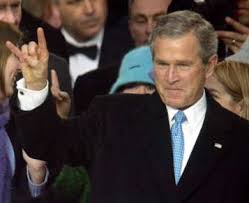
Nicely done President Bush, Nicely Done

Former President George W. Bush spoke to a crowd of 17,000 spectators at the University of North Texas coliseum last night. While I believe his speech left me wanting, it was a mediocre presentation. As a public relations and marketing student, I wondered what President Bush’s motives for speaking at a known liberal college and how his public relations team finagled it.
President Bush’s presidency was rife with conflict, controversy, and an ever-present degree of skepticism.  Many heralded him as the “dumb” president and of just riding the coattails of his father, President George Bush Sr. While I will not debate his candidacy as a whole nor his political actions, I will analyze his public relations team and their decision to allow President Bush to speak at UNT.
I believe it boils down to two key factors: money and the fact that UNT is a liberal arts school.
Money is a huge factor. President Bush made $100,000 to speak at UNT last night, money that is rumored to have come from students’ tuitions. President Bush made $400,000 per year as president and we gave him a quarter of that to speak for a little over an hour. Needless to say, I was shocked. It’s hard to turn down easy money and President Bush as a business man realized that this was an opportunity to increase his personal income. Still, money would not be the only reason President Bush would speak at UNT.
The biggest question I asked myself when I heard that President Bush was coming to UNT was, “Why?” Why would he choose this school when SMU, Texas A&M or Baylor University would have been more suitable venues with mentalities that were more favorable to President Bush’s ideas. His PR team didn't want to go with the traditional route. They wanted to position President Bush as a man who goes beyond political boundaries, especially for the nation’s students. I believe the team may have even wanted to piggy-back on the 9/11 tale  of how President Bush was reading to the elementary students and after he heard about the plane attack kept reading as to not alarm the children.
I believe speaking to a liberal school as a opposed to a traditionally conservative school was a calculated move by his PR team and I agree with their decision. President Bush is no longer president and must maintain his income. Which equals he must push a product; the physical product being his book and ethereal product being himself. In order to gain a bigger audience and increase the sales of his book, he must branch out to different demographics and show that he can relate to everyone. He needs to portray that what he did in his presidency cannot be summed up by a simple answer and to better understand him as a person, you must read his book.
I believe President George Bush’s PR team was entirely correct in having him speak at UNT and deem it was a brilliant public relations strategy.

Epic is only a Word, Spike Lee is the embodiment

Last Thursday, November 11th, I was privileged to be able to listen to the great filmmaker Spike Lee as he spoke to the University of North Texas students. I have grown up with Spike Lee in a way, all culminating with his amazing HBO documentary, "If God willing and the Creek Don't Rise." Honestly, I was expecting Lee to be dressed in fancy clothes and to speak so eloquently that I would be mesmerized by what he was saying, what I got was a man who reminded me of my grandpa, a soft spoken man with wisdsom beyond time.
I love how he spoke of not knowing what his final career destination was and how he was not the best student academically. But it was so encouraging to to hear him speak about the summer he discovered his passion. I have yet to have that lightning bolt moment, but to hear him speak of his makes the search easier.


His views on the Black culture at the current time are spot on. I agreed with every opinion, especially the about how we criticize our fellow Black students for succeeding academically. His statements about how black students who speak with eloquence and correct diction are called "white" rang extremely true with me seeing how I was called that from age five to the current day. Fortunately, I knew well enough that people were teasing me because of pure jealousy or simply because they did not understand my personality. But what if a Black student is not strong enough to withstand the teasing? Then thats when we have the pseudo mentality that to be a "true Black person" you need to behave as a caricature, a stereotype, a mold that society can understand. My hope is to change this, with every person I meet and with every interaction that takes place, I want to shatter a stereotype and be an example of a strong Black woman.

Friday, November 12, 2010

An Hour of Anticipation


I view this situation from a public relations standpoint. As a public relations professional, we must make sure that our clients are portrayed and perceived as honestly as possible. In James' situation, he was perceived as an attention-seeking athlete. As a PR executive, I would have tested small markets to gauge the reaction of the announcement to the people. To appease the client, I would not have divulged any information that would jeopardize his career or marketability.
 

Secondly, I would have made the fact that all proceeds benefit charity a forefront in the minds of the public. It’s common knowledge that people sympathize with someone doing charitable work.

I believe the minor tweaks and the research I would have done would have sharply decreased or better prepared James for the media fallout and the unpopular public approval.

The setting is July 8, 2010. On a rainy Thursday, the television sets were tuned to ESPN in anticipation of "The Decision". One might assume it was for a presidential speech, but no--It was so Lebron James, basketball player, could announce where the city of his future career.

At 8 p.m. ESPN's ratings skyrocketed, command for ad space was at a high as was the price for that space. James drew extreme criticism for this public meeting. Many saying he was exploiting basketball and diminishing the prestige of the game. Yet, James retort to those claims were that all of the proceeds of the televised hour were being awarded to charity.

James' decision to host "The decision" indelibly weakened his public image. James is marketed as being the All-American phenomenon. He was born and raised in Ohio, decided to forgo college in hopes of NBA stardom, and succeeded beyond anyone's belief. He is often hailed as the next Michael Jordan.

Yet many people, including the most die-hard of sports fans, consider him a traitor, snake and exhibitionist. According to a recent poll, 34% of the population views James negatively.

Wednesday, November 10, 2010

Danica, Danica, Danica

This past weekend, I went to Texas Motor Speedway to watch the NASCAR racing events. Now, I could blog about how in a crowd of 500,000 I only saw about 50 African-American people or how there was an abundance of "Southern" flags with the confederacy symbol on them, but no, I will blog about the over-sexualization of Danica Patrick.

In a sport dominated by men, Danica is the sole female. She an athletic, brown-eyed brunette young woman. She was successful in the IndyCar series and has recently moved up to NASCAR racing.

While I commend her for entering a field dominated by men and being successful in that field, I do not commend her and her marketing team for their over-sexualization of Danica.

To her benefit, or downfall, she a very attractive woman. Often, when attractive women enter fields dominated by men, women feel they must heighten their sexuality as to compete with men and appear more feminine.
I believe Danica should be marketed with the slant of "strong-female-athlete" not a sexually-charged woman who also happens to be an athlete.

Friday, November 5, 2010

Atlanta Thrashers’ Interesting PR Tactic

Last Thursday, October 27th, a story appeared on the Yahoo! Sports blog. I am not usually one to read the sports blog as I am a pop culture kind of girl, but this story captured my attention with its topic: the high number of African-American hockey players on the Atlanta Thrashers team, six in the active roster.
             In a sport not known to be big in the African-American culture, having six players in the entire league is a feat, let alone six on one team.  In fact, having six Black players on the active roster for one team is an NHL record, according to blogger Greg Wyshynski. In his blog, Wyshynski debates whether the high number of Black players on Atlanta’s team is a marketing ploy to reach a new demographic. Atlanta is second in the nation for highest African-American population behind New York. That statistic coupled with the fact that hockey is thought of as a sport with a strong African- American presence lends to the viewpoint that it is an attempt to fill seats to the hockey games.

            If the acquiring of six Black players is merely a marketing attempt by the Atlanta Thrashers, is it a complete exploitation of these players? I understand that need to break into a new demographic and the ending objective is to sell tickets to the games, but if their marketing tactics rest solely on the Black players, I find it exploiting.

            On the other hand, the marketing side of me completely agrees with their marketing tactics. There is obviously an untapped market in Atlanta ripe for targeting. These players are great at their sport and also happen to be African-American. The Thrashers could simply be using the resources given to them to create more revenue. The saying “When life gives you lemons, make lemonade” can definitely be applied here.

            It is obvious I am torn about whether this was a mere coincidence or a gross marketing ploy. I guess the real topic I am debating is exploitation. How far can the Thrashers market these six players before it becomes exploitive? It is still yet to be seen the effects of this advertising upon the African-American demographic in Atlanta. I believe the answer of how exploitive is this campaign really is will be determined by the citizens of Atlanta.

Thursday, November 4, 2010

Dove Campaign for Real Beauty

Recently for a Marketing project, I was called upon to speak about the viral video, "Evolution." We have watched this video in our Race, Gender, Media class and discussed its meaning this that class, but now I had to look at the video from a marketing standpoint.

The video itself is 75 seconds and is the process of which a woman is made "beautiful." She is caked with makeup and photoshopped to the point that she is hardly recognizable. While I praise Dove for this campaign, I wonder what are the marketing implications for this video. Was the Dove brand really that fed up with the idea of beauty that the media portrayed or did they feel that with this video, they could reach an untapped market--liberal woman who are slightly against the media?

Thursday, October 28, 2010

The Sports and Public Relations Correlation

          Being a born and bred Texan, I have grown up with the words, “Football is God” being said casually over conversation. Why is football god and not academics? I often wonder why a team with a good sports team is automatically considered to be a school with a good academic program as well. Why does a good sports team automatically increase a city, or schools, chance for positive recognition?
The University of North Texas is a world-renown school. Musicians from near and far regard the school in high standards due to its musical prestige. Yet, because UNT does not have an amazing football team, many people regard the school as just mediocre. I find this ironic because (in my opinion) Texas Tech does not have the highest standards for academic excellence, yet they are considered better than UNT because of their football team.
            Although I believe there is definitely a way to misconstrue the value of a winning sports team, one cannot disregard the power of sports to portray a city or school in positive light. I will use baseball as an example.
The Texas Rangers are now in the World Series. Simply by being associated with the Texas Rangers, Dallas has received a plethora of positive public relations. Dallas is now deemed as a city of winners and where strong productive members of society reside. Dallas is now a topic on the minds of millions of Americans when usually it is not. During games #Texasrangers is usually a trending topic on Twitter where millions of people have access and the reach is enormous.
While I do not agree that sports should have such a huge factor in determining the value of a city, I cannot deny the aspect of free public relations and the positive effect that publicity can have on a city.

Wednesday, October 27, 2010

For Colored Girls...


Tyler Perry has a new movie coming out titled, "For Colored Girls." This movies stars the most heavy hitting African-American actresses and actors of our time. While many are praising the movie for its innovative themes, I beg the question, if the movie was called "For white women," would the reaction still be the same?


If the movie title was for any other race other than African-American, I believe there would be a huge backlash against the movie. The movie would be dubbed racists and most likely wouldn't event be made by a mainstream production company.

This movie has a central theme of "Black pride" yet, it poses the thought that if the movie was for "White" pride it would be linked to white supremacy.

Why is there a double-standard for having pride for your race if you are white, yet for minorities it is completely accepted and even encouraged? While I am definitely not one to support white supremacy, I do think that having pride for your race should be encouraged. It helps establish a sense of self and pride in ones background.

Friday, October 22, 2010

Evolution


The Dallas PRSA Fall 2010 Communications Summit was held today. Brian Solis, the lunch keynote speaker, said many inspiring quotes, but one resonated within me: “PR is only dying if it’s not evolving.” Such a simple phrase yet it packs such a message.
Public Relations is one of, if not the, fastest evolving professions available. Literally from the invention of the Gutenberg press to the first press release by Ivy Lee, PR has constantly been evolving. I find this wildly exhilarating and both challenging about the industry.
In an industry where as soon as you type words on paper, that action is obsolete, the task of learning the new trends can be daunting. Social media trends grow and die so quickly it is hard to keep up. It is a strategic intelligent move to decide which social media avenue to invest in and actually pursue rather than glance over them all.
            As a person born in Generation Y, I have grown accustomed to social media and its benefits. I have literally grown up using social media without acknowledging that the actions I was utilizing could one day help me in my future profession.
            Social media gives the consumers and “average Americans” a direct voice. They can now convey to the companies and business entities exactly what they want to say. The consumers’ opinions are also valued more because their opinions can be viewed by millions via the internet.
            I believe social media is the evolution of PR. Social media is a huge shift in the public relations industry that will resonate for years to come.

Thursday, October 21, 2010

10/20/2010. A day of reflection and Hope


Yesterday was "Wear Purple in support of banning Anti-Gay bullying" On the UNT campus, I saw a sea of purple coming from every direction and it honestly made me so proud to be a UNT Eagle. It also stirred a debate between my girlfriends and I. Often, we say how we love gay men, but don't really care for lesbian women. What is up with that double standard?


My friends and I are completely for gay rights, we have several gay and lesbian friends, but why the bias? Honestly, It bothers me that there is that double standards when it comes to this subject. The debate made me look inside myself and really analyze where this bias originates from. 


After our debate, I started wondering if this conversation, or others like it, were being had by other people. Conversations that really challenge what people believe and their current opinions.


October 20, 2010 was a day of inspiring hope and introspective personal reflections. I believe this day was instrumental of getting the topic of gay rights to the forefront of every conversation and really showing how much support the gay rights movement actually has.


Equality for All!

Friday, October 15, 2010

The McRib Respects


McDonald’s is easily one of the world’s most recognizable companies. Their marketing strategy is impeccable and ingenious. McDonald’s has superior brand recognition, everyone (and I do mean everyone) can discern that the golden arches are a symbol of McDonald’s. While their marketing strategy is constantly receiving high praise, I feel that their public relations team should also be applauded.
            Recently, Yahoo! Finance covered a story about the McDonald’s McRib sandwich. The story detailed how the McRib sandwich has attained an elusive quality,  as it is only available for a limited time in various geographic locations around the country. This mysteriousness has resulted in a cult-like following for the McRib. Websites such as http://kleincast.com/maps/mcrib.php make searching for the McRib a hunt, a quest for the golden sandwich if you will.
            The defining principal of public relations is to be the link between the public and the company. Obviously the public wanted its McRib sandwich and McDonald’s wants to supply their consumers with a popular product. The catch is, McDonald’s does not consider the McRib to be profitable year-round, therefore only releasing it in certain areas at certain times within the year.
The relationship between McDonald’s and the McRib consumers is one of trust and respect. McDonald’s does not advertise excessively for the sandwich, they rely on word of mouth and the influence of the die-hard McRib fans to spread the word. The McRib Lovers feel valued and respected, which helps support to their successive visits to McDonald’s.
McDonald’s has managed to find a segmented market and directly appeal to that base. Instead of completely removing the product from their menu, they have listened directly to their consumers about their wants and concerns. And this respect between the consumer and company is exactly what sets McDonald’s away from the pack.

Thursday, October 14, 2010

"Eh, Just Take Them Out"- Couples Retreat

In the Summer of 2010, a comedy was released, Couple Retreat. The plot is focused around four couples and their quest be happy in each of their relationships. Out of the four couples, only one is of a different ethnicity. Shane and Trudy are african-American. The movie is sub-par at best but the controversy is derived from the movies promotional poster.


Notice how in the American version of the poster (on the right) the Black couple is clearly visible. They are the furthest away and seem the least important,yet they hold just as much importance to the movie as the other characters. This jab aside, we must look to the European version of the poster (on the left). The Black couple is completely non existent.

The movie received much flack for this change, many calling the movie racist. The production company simply stated that to "condense the poster, certain characters had to be removed." How convenient that it was the Black couple.

With such Hollywood heavy hitters such as Malin Ackerman, Vince Vaughn, and Jason Bateman, I'm surprised we didn't hear more outcry from these popular actors. If they honestly felt that a wrong was done, the production company would have changed the poster. Vaughn was even a producer for the movie and this travesty still occurred.

While Hollywood has made strides toward equal treatment of ethnicities, it still has a long way to go as evident by this poster mishandling. 

Friday, October 8, 2010

The Art of a Slogan

While on a recent trip to Philadelphia, I came across a restaurant known for its delicious cheesesteaks called Delessandro’s.  Although this tiny restaurant produces the most flavorful cheesesteaks in the lower Philadelphia area, the thing I remember most about this restaurant was the slogan: "If it doesn't taste like Delessandro’s steaks and hoagies, then its not."

While this slogan is short and sweet, it simply does not make sense.  Printed on all the paper menus, each customer will have an opportunity to read this slogan. I will admit, the slogan adds a kitschy local charm to the business, but it does not make complete grammatical sense.

The sentence is incomplete as it is missing a second portion of the sentence. “Then it is not” does not have enough ground to stand on its own and thus is a dependent clause.

If I had power to help the Delessandro’s restaurant, I would change the slogan to “If it doesn't taste like Delessandro’s steaks and hoagies, then it’s not the original." While this change is small and only adds two words, it completes the sentence. It makes sense to the reader while maintaining the same local feel of the slogan.

I believe the catchy slogan undoubtedly helps brand recognition of the popular restaurant, but to improve professionalism and credibility, the slogan should definitely be changed.

Friday, October 1, 2010

Negative impact of Molestion charges on the City of El Paso

On September 30, The Washington Post reported a story regarding the sexual misconduct of an El Paso high school teacher. The teacher in question, 34-year-old Marco Alferez, is accused of with having sexual encounters with at most 70 students—all encounters being taped.
As the story was exposed today, many details are still coming out about the encounters. Readers know that of the 70 students victimizes, several were elementary aged. We know that Alferez only began employment with the school district in 2008, which equates to molesting up to 45 students each school year. What readers aren’t told is how this story unconsciously degrades the reputation of the city of El Paso and its educational system.
El Paso is a border town, directly riding the border between Texas and Mexico. As a native Texan, I associate El Paso with border patrol and gang violence. While neither gangs nor border patrol represent a positive depiction of El Paso, the city is known for its strong Hispanic culture. El Paso is home to four four-year universities including the University of Texas-El Paso and five independent school districts. That educational system will now be under fire as a result of this story.
This case of alleged child molestation will negatively impact the city economically, socially, and culturally. Economically, the city will suffer due to the cost of a trial and in the future by the negative connotation El Paso’s education system will undergo. Many families  are not going to want to move to a town where they feel they cannot trust the teachers. As students spend at least seven hours at school, parents need to feel that their children are in safe hands, not the hands of a monster.
El Paso will be affected socially because the city is now associated with sexual misconduct. El Paso is a large city on the edge of Texas. The Washington Post and other highly recognized papers regularly cover the city due to its violent crime incidents.  
It’s a common belief that one never suspects the people most like themselves to be the ones who hurt them. In a city enriched with Hispanic culture, the citizens probably never suspected a Hispanic male of being a threat to their community. As an African-American woman, I compare this crime to an African-American rapist targeting Black women.  Regardless of race, the crime is still appalling; it’s just another nonsensical aspect of the crime.
I believe the city of El Paso, Texas, will have to launch into crisis management mode to repair the damage done by this teacher.

Wednesday, September 29, 2010

Why is Bigger not considered Beautiful?

In a previous job, we were in the process of selecting models for our new print and social networking campaign. The supervisor states that we were going to be using our friends and try to achieve the average college student look. As I surveyed the pictures of already chosen models, I noticed several unifying factors. All were: white, impossibly skinny, and did not represent the average American college student.

Luckily as the process continued, we began to diversify the ethnicities more, but the same impossibly skinny factor still held true. To combat this issue, I tried to suggest several friends who were obviously very pretty, yet were bigger women. They were met with, "I don't think that the image we're going for." So I beg the question, why are bigger women not considered beautiful.

In the middle ages, being bigger was a sign of health and wealth. When did this change? And how can we rectify this change?

My mother is one of the most gorgeous women I have ever seen. She is also a full-sized woman. According to society, the fact that she's plus sized diminishes her beauty.


In my opinion, show me someone who doesn't think plus sized women are beautiful and I'll show you a woman who struggles with an eating disorder, an unpleasant man with a false sense of reality, and a little girl who only knows what society tells her.

Friday, September 24, 2010

Facebook Philanthropy: Sincere or Publicity Stunt

Facebook recently donated 100 million dollars to the city of New Jersey’s educational system, or should I rather say Mark Zuckerberg donated the money. Many have criticized his sudden gift as simply a publicity stunt to counteract the release of the movie, “The Social Network,” which is about the rapid rise of both Facebook and Zuckerberg. I believe the donation was mainly for publicity, with a little hint of sincerity...or a tax deduction.
            Zuckerberg claims that he wants to model himself after fellow billionaire Bill Gates. Gates is known for his philanthropy and his giving nature. Although Gates has not always been so charitable, after his marriage he started his crusade to encourage charitable works. He has stated previously that every billionaire in the world should give half of their net worth to charity in their lifetime.  According to an article posted by NPR. Zuckerberg is attempting to challenge the established system and use of the assets available to him for charity.  If his intention for the donation is purely for charity and made with a sincere heart, I commend Zuckerberg.
            Yet, the article also states that this donation could be purely for positive publicity. It is a known fact that “The Social Network” film is portraying Zuckerberg in a negative fashion. On September 24, 2010, Zuckerberg appeared on The Oprah Winfrey Show to announce his charitable act. (Conveniently enough, this date is exactly one week before the wide release of the film.)  The donation itself is enough to garner attention, why promote and flaunt the act on the leading daytime talk show? In fact, a daytime talk show that has the fastest growing demographic on Facebook. I believe Zuckerberg knew Facebook would be heavily criticized and viewed more critically following the film release and wanted to proactively protect his image from harsh analysis.

Wednesday, September 22, 2010

If only I were born in 50 years earlier...

Little known fact: When black newspapers were in their hey day, being a journalist was the third most respected and aspired for career behind celebrity and musician. When this was stated in the video, my mouth literally hung open for a solid 10 seconds. I never knew that the black community ever thought so highly of the journalism profession.

Two points come to mind when I think about this fact: one, that the journalism profession as a whole was viewed as respectable and two that there were an abundance of black journalist and that they had a pretty big influence on societal changes.

The journalism profession is currently viewed as skeptical, shady, and manipulative. According to many polls, journalism is usually rated among the most untrusted of professions. The public doesn't trust the content of the media nor the methods of which the media receives the information. In the 1950's though, the print media was one of onluy three sources a person could recive news. There was much more trust in those times. Journalist were respected, they citizens weren't so skeptical of the content.

I had no clue that black journalism was so huge and financially successful. I thought it was just a few mom and pop papers that really made no significance or impact on America. My was I wrong. I like to think about if I had been born in 1930's how I personally could have made an impact on the black journalist movement. I hope that Black newspapers make a nostalgic comeback. I would love to be involvved in that part of history.

Plus I absolutely love the "Double V" slogan :)

Thursday, September 16, 2010

Inés Sainz: Sympathy or just plain Stupidity

This past Monday, the New York Jets were charged with sexual harassment by female reporter Inés Sainz. She claims that unprofessional comments were said that were sexually charged and made her feel uncomfortable. Now upon initially hearing of this story, I immediately felt sympathy for Sainz. As a woman in a male dominated field, it can be very intimidating at times, especially in what is considered "men-only" territory.

 A woman in a man's field is expected to tough it out, not shake the boat or complain. That we chose to be in this field so we need to accept whatever criticism or harassment we are subjected to. My boyfriend, a sports broadcaster, and I got into a heated debate over Sainz's claims. My argument was that a woman should not be sexually harassed in any shape or form if it is in a professional environment.  Nor should she expect to be harassed simply because she is an attractive woman. My boyfriend's argument was that if a woman is in a locker room, then she should understand that that is a very social atmosphere for those men and they speak without a sensor.

Now, much has come to light regarding the character and professional ability of Sainz. She dresses provocatively, uses her beauty to enhance her career and is not highly recognized as having the best journalist integrity. But, all that being said, does she deserve to be sexually harassed for simply doing her job?

After speaking to several people, men and woman, it seems the answer lies in which sex you ask. Men say she was asking for it, woman say that it's not her fault she beautiful and simply trying to complete her job.

But honestly, shouldn't the conversation be leaning more towards the sexual harassment?

Friday, September 10, 2010

Apple's Interesting PR Strategy


I would consider myself an atypical Apple customer. I don't own a Macbook nor an iPad, I only own an iPhone (3G) and a very old iPod nano. Yet, I like to be knowledgeable about Apple and the new technological advances. I find Apple intriguing and their innovation is inspirational. They have the ability to notice an opening in the market and cater to that market. 

So needless to say, whenever Steve Jobs makes an announcement, I am always receptive. Not only do I pay attention to the speech itself, I am even more intrigued by the media response. 

The media response to Apple is enormous. In my opinion, the response rivals that of President Obama. After Steve Jobs presents some new invention or upgrade of an Apple product, the media response can be seen on various different channels from entertainment to business to sports.

Yet, in this media response, I often do not hear much about the negative aspects of the product. I find this highly interesting because in my opinion, the media and consumers are very quick to point out the negatives of a highly touted product. 

Upon further investigation, I read an article from a fellow blogger that hinted towards Apple's unethical way of controlling their public relations. It has been claimed that Apple will delete unflattering comments from their support boards. 

As a public relations professional I tout this as highly unethical, unprofessional, and downright wrong. By Apple applying this strategy they undermine the entire public relations profession. I fear that if other smaller companies see Apple conducting their public relations in this manner, they will believe this an logical method of PRand follow suit. It will a perpetual cycle.


Thursday, September 9, 2010

Why I Sit with Black Girls

During class we were asked to sit with people who we thought were most like ourselves. I surveyed the room and realized that out of a class of about 50 people, there was a total of four African-American students present. So, of course, I sat with them.

By coincidence my best friend and roommate, who is a Caucasian female, is also in the same class. Even though I know we are quite similar, in fact we can finish each others sentences, I still chose to sit with the other African-Americans.

As I was sitting with other students "like me" I began to notice, that we really don't have much in common besides our skin color. Yet, that simple factor was unifying enough to cause us all to sit together.

So I wonder now, If I was joining the other African-American students because as a covert way of exhibiting to world that the African-American race is unified or simply because it was the easy and expected choice.

Thursday, September 2, 2010

Black in America: Media Edition

During the first Race, Gender, Media class of the semester our discussion primarily focused on the perceptions of Blacks in the media. As a young Black female, I found this particularly interesting.

The video we watched in class confirmed the bias of the media. The bias being Black portrayed negatively in the media, more specifically prime time news. As the video progressed, I could only recount personal experiences and correlate them with the findings.

Growing up, I went to a school that was predominately white. I was part of a sprinkle of pepper in a sea of salt, so to speak. Many times, my friends would commend me on being the  "friendly black woman." They would mention a part of town as the "ghetto" and how only people who lived there were poor, on welfare, and black. Interesting enough, I had several family members who lived on that side of town. Some wealthy, some poor. But what bothered me was the lack of acknowledgement that other races besides Black lived in the "ghetto." Crime was being committed by people of all colors and races, yet the only race we heard about on a daily basis was African-American.

Surely one cannot miss the correlation between how the "White" part of town viewed the "ghetto" and the media's perception of the ghetto.

In my opinion, its like a self-fulling prophecy. Because Blacks were portrayed as weak, violent, uneducated people, that is how they felt they should act.

The Anti-Bloggers Blog

So as a requirement for several senior classes, I have to initiate a blog and a twitter account. To those who know me, I am the most extreme anti-twitter person around. I do recognize the hypocrisy as I am an avid Facebook advocate, but Twitter and blogging seem too invasive.  I mean really, why does someone need to know your every movement. If they were really curious, that's what texting is for :)


But, seeing as I must blog, I might as well go all out and completely commit to it. So I will document my senior year, the last two semesters of my adolescence. 


Here we go...


(This is my "I'm-really-excited-about-blogging" face)